
Timeshare Cost Guide
Timeshare Maintenance Fees: What They Cover, Why They Rise & When to Reevaluate
Maintenance fees are one of the largest recurring costs of timeshare ownership. They help support resort operations, staffing, property upkeep, reserves, and other ongoing expenses—but the more important question is whether the fee still makes sense for the vacation value you actually receive.
The decision: Are your timeshare maintenance fees still reasonable for the value you receive—and when should rising fees change how you view the ownership?
This guide explains recurring timeshare maintenance fees, the operating costs they may support, why fees can change, how they differ from special assessments, and how owners can evaluate the fee in the context of actual usage and vacation value. Exact charges and budgeting practices vary by resort, association, developer, club, and ownership structure.
On This Page
- What are maintenance fees?
- What changes the answer?
- What do maintenance fees pay for?
- Why do maintenance fees increase?
- Are your maintenance fees too high?
- Do the fees still make sense?
- Maintenance fees vs. special assessments
- When rising fees become a bigger problem
- Which situation fits you?
- My Take
- Frequently asked questions
- TTCA Decision

Maintenance fees are an ongoing cost of timeshare ownership. The more useful question is whether that recurring cost still makes sense for the vacation value and use you receive.
Quick Answer
What Are Timeshare Maintenance Fees—and Why Do They Keep Increasing?
Timeshare maintenance fees are recurring charges used to support the ownership program, resort, association, or property operations. Depending on the ownership, they may help fund staffing, utilities, insurance, housekeeping, landscaping, pools and amenities, repairs, administration, reserve accounts, and other shared expenses.
Fees can increase as those operating and reserve costs change. But an increase by itself does not tell you whether the fee has become unreasonable.
The more useful question is whether the ownership continues to provide enough usable vacation value to justify the recurring cost.
What do timeshare maintenance fees usually cover?
Timeshare maintenance fees are recurring owner charges used to support the ongoing operation, upkeep, administration, and long-term needs of a resort or ownership program.
Depending on the property or club, that can include staffing, housekeeping, utilities, insurance, landscaping, pools and amenities, routine repairs, administration, reserve funding, and other shared expenses. Special assessments are separate charges and should not be treated as the same thing as the normal annual maintenance fee.
What Changes the Answer
Not Every Maintenance Fee Can Be Judged the Same Way
A $1,500 annual fee may represent very different economics depending on what the owner receives and what the property or program must support.
- What you own Unit size, season, points allocation, ownership structure, or membership level can affect how fees are calculated.
- Resort and program scope Properties with extensive amenities, multiple facilities, large grounds, or broader program services may have different operating requirements.
- Reserve funding Associations or programs may need to fund reserves for future repairs, renovations, replacement projects, and other long-term needs.
- Operating costs Labor, insurance, utilities, taxes where applicable, supplies, maintenance, and vendor costs can change over time.
- Your actual usage The same annual fee feels very different when an owner consistently uses the ownership versus rarely traveling with it.
- Your booking success Access on paper has less value when the owner repeatedly struggles to reserve the dates, destinations, or accommodations they need.
- The vacation value received Larger units, kitchens, multiple bedrooms, resort amenities, preferred locations, and family use may be worth more to one owner than another.
Resort Operations
What Do Timeshare Maintenance Fees Pay For?
The exact allocation varies, but maintenance fees commonly support the ongoing operation, upkeep, and long-term needs of the resort or ownership program.
Depending on the property or club, that can include:
- housekeeping and common-area care;
- landscaping and grounds maintenance;
- pool, recreation, and amenity upkeep;
- front-desk, operations, and maintenance staffing;
- utilities and shared services;
- insurance;
- administration and association expenses;
- routine repairs and preventive maintenance;
- replacement of furnishings, equipment, or building systems; and
- reserve funding for future capital needs.
Not every ownership uses the same budget structure, and a fee statement may group expenses differently. The useful point is that maintenance fees are generally connected to the continuing cost of operating and supporting what owners use.
Fee Growth
Why Do Timeshare Maintenance Fees Go Up?
Maintenance fees can rise when the costs of operating, repairing, insuring, and reserving for a property or ownership program increase.
Potential drivers can include higher labor costs, utilities, insurance, vendor pricing, taxes where applicable, repairs, aging infrastructure, renovation needs, and reserve-funding requirements.
An increase does not automatically prove that the fee is excessive or well managed. It tells you that the recurring cost has changed and deserves to be evaluated in context.
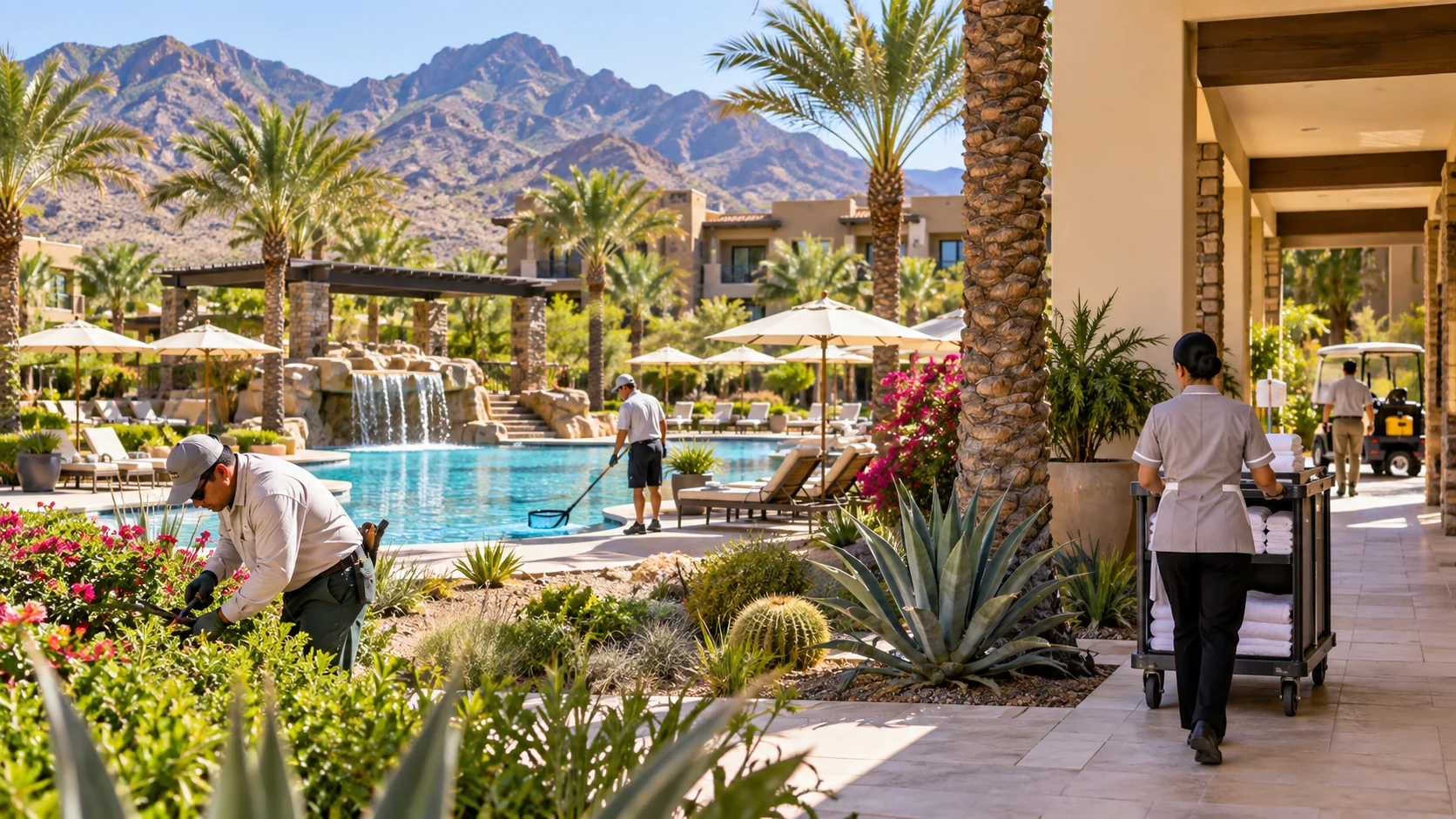
Maintenance fees help fund the ongoing operation and upkeep of a resort, including landscaping, pools, housekeeping, property maintenance, staffing, and shared facilities.
Fee Comparison
How Can You Tell If Your Timeshare Maintenance Fees Are Too High?
There is no single fee amount that automatically makes every timeshare expensive or inexpensive.
Instead of relying on a broad national average, start with the ownership you actually have.
Review your own fee history
Look at several years of statements when available. The dollar increase and long-term pattern can be more informative than reacting to a single year’s percentage change.
Consider what you own
A large villa, high points allocation, premium season, or ownership with extensive resort amenities may not be directly comparable with a smaller or more limited product.
Look at what you actually receive
Ask how often you travel, how successfully you book, which benefits you use, and what equivalent vacations would realistically cost you without the ownership.
Separate frustration from economics
You may reasonably dislike an increase and still conclude that the ownership provides good value. Likewise, a modest fee may still be difficult to justify when you rarely use the timeshare.
Cost vs. Value
Do Your Maintenance Fees Still Make Sense for the Vacations You Receive?
Maintenance fees become more meaningful when you compare them with actual use rather than viewing the bill in isolation.
An owner paying $2,000 a year and using a spacious resort villa for multiple vacations may reach a very different conclusion from someone paying the same amount while using the ownership only occasionally.
Booking success matters too. A resort network or points program may look valuable on paper, but recurring fees are harder to justify if you routinely cannot reserve the dates, destinations, or accommodation types that caused you to buy in the first place.

TTCA Ownership PathFinder™
Keep, rent, sell or exit?
Rising maintenance fees do not automatically mean you should leave the ownership—but they can change which path makes the most sense.
Answer five quick questions to compare Keep, Rent, Sell, and Exit based on the value you still receive, what the ownership costs, and what you want next.
Complimentary for TTCA visitors • About 2 minutes
You decide what happens next. We help you understand the paths.
Important Distinction
Maintenance Fees and Special Assessments Are Not the Same Thing
Maintenance fees are generally recurring charges used to support ordinary operations, upkeep, reserves, and continuing ownership expenses.
A special assessment is an additional charge that may be imposed for a particular funding need, project, shortfall, repair, or other circumstance outside the normal annual billing structure. For a deeper look at how these charges work and what owners should evaluate, see Timeshare Special Assessments .
The exact rules and purposes vary by ownership and governing documents. Special assessments are not inevitable, and they should not automatically be treated as part of every owner’s annual cost.
When the Equation Changes
When Do Rising Maintenance Fees Become a Bigger Ownership Problem?
A rising fee becomes more significant when other parts of the ownership are weakening at the same time.
I would pay particular attention when:
- the fee continues rising while you use the timeshare less;
- booking the vacations you want has become consistently difficult;
- you pay additional exchange or reservation costs just to make the ownership usable;
- important benefits no longer fit the way you travel;
- your preferred destinations or accommodation needs have changed;
- the recurring cost is becoming uncomfortable within your broader travel budget; or
- you would not willingly accept the same annual obligation if deciding today.
None of those factors alone automatically means the ownership should be changed or exited. Together, however, they can signal that the question has moved beyond a simple fee increase into a broader ownership-change decision.

Rising maintenance fees matter most in context: how often you use the ownership, the vacations it supports, and whether the value you receive continues to justify the recurring cost.
Which Situation Fits You?
Rising Fees May Still Make Sense—or They May Be a Reason to Reevaluate
The fees may still make sense if…
- You consistently use the ownership.
- You can generally reserve vacations you actually want.
- You value the accommodations and resort experience.
- The fee remains comfortable within your travel budget.
- You use meaningful benefits beyond the core stay.
- Comparable vacations would realistically cost you a similar amount or more.
- You would willingly accept the recurring cost if deciding today.
It may be time to reevaluate if…
- You pay the fee but rarely use the ownership.
- Your booking experience has become consistently frustrating.
- The fee is consuming more of your travel budget than you want.
- You increasingly pay other costs to obtain usable vacations.
- Your travel preferences have moved away from what the ownership offers.
- The benefits you once valued now go largely unused.
- You would not knowingly accept the same obligation today.
Reconsidering the economics does not automatically mean you should exit. Sometimes the next step is understanding the full cost, using the ownership differently, improving booking strategy, or deciding whether the ownership still fits before deciding whether the ownership still fits.
If rising fees no longer fit, what are the main ownership paths?
- Keep →
- Continue owning and focus on getting enough practical vacation value from the usage, booking access, and benefits you already pay for.
- Rent →
- Keep the ownership while exploring whether eligible unused usage can help offset some of the recurring annual cost.
- Sell →
- Explore whether a realistic resale or transfer market exists for the ownership rather than continuing to carry fees for something you no longer want.
- Exit →
- Explore legitimate ways to end the ongoing ownership obligation, including direct developer options, transfer, resale, or qualified outside help when appropriate.
My Take
I Would Not Judge a Maintenance-Fee Increase by the Percentage Alone
I would look at what I am paying now, how quickly the cost has been changing, how consistently I use the ownership, whether I can still book what I want, and whether I still value the vacations I receive.
If the ownership continues to work well for me, a higher fee may still be reasonable. I would rather pay more for an ownership I use and value than pay less for one that sits unused.
If the cost keeps rising while my usage, booking success, or travel fit declines, that is when I would start questioning whether the ownership still earns its place in my travel budget.
And if I reached the point where I was considering simply not paying the fee, I would treat that as a different decision and understand the possible consequences before taking that step.
If rising fees are only part of a broader ownership problem and you have already reviewed the direct options available through your resort or developer, Timeshare Specialists can help you explore resale, brokerage, transfer, or another ownership-resolution path.
Request a ConsultationGet clearer timeshare guidance.
Understand what changes the answer before making your next ownership, cost, usage, resale, transfer, or exit decision.
Frequently Asked Questions
Timeshare Maintenance Fees FAQ
What are timeshare maintenance fees?
Maintenance fees are recurring ownership charges that generally help fund resort or program operations, upkeep, staffing, insurance, utilities, repairs, administration, reserves, and other shared expenses. The exact allocation varies by ownership.
Why do timeshare maintenance fees increase?
Fees can rise when labor, insurance, utilities, repairs, vendor costs, reserve requirements, taxes where applicable, and other operating expenses increase. The specific reasons depend on the property or program budget.
Do I have to pay maintenance fees if I do not use my timeshare?
In many ownership structures, recurring fees are tied to owning the interest rather than whether you use it in a particular year. Review your governing documents for the obligations attached to your ownership.
Are maintenance fees the same as special assessments?
No. Maintenance fees are generally recurring ownership charges. A special assessment is an additional charge associated with a particular funding need, project, repair, or shortfall. The rules vary by ownership.
How do I know if my maintenance fees are too high?
Compare your own fee history with what you own, the resort or program you receive, how successfully you use it, and what comparable vacations would realistically cost you. A single national average usually does not answer whether your particular fee represents good value.
Do rising maintenance fees mean I should get rid of my timeshare?
Not automatically. Rising fees matter most in relation to usage, booking success, benefits, affordability, and travel fit. An ownership that still provides substantial vacation value may remain worthwhile despite higher fees.
What if I am thinking about stopping payment on my maintenance fees?
That is a different decision from evaluating whether a fee is high. Before stopping payment, understand the possible contractual, collection, ownership, and credit consequences. See Should You Stop Paying Your Timeshare?
TTCA Decision
Maintenance Fees Matter Most in Relation to the Ownership Value You Actually Receive
A maintenance-fee increase is not automatically evidence that a timeshare is no longer worth owning. Recurring resort costs can change, and owners can still receive substantial value from an ownership with higher fees.
The decision becomes more important when the fee trajectory is no longer matched by actual use, successful booking, benefits, affordability, or travel value. That is when the maintenance-fee question becomes a broader ownership decision.
Continue From Here
Follow the question your maintenance fees are really raising.

Calculate the Real Cost of Timeshare Ownership
Combine maintenance fees with purchase cost, financing, assessments, reservation spending, and actual use to see the broader economics.
Are Timeshares Worth It?
Compare cost, usage, booking success, benefits, and travel fit to decide whether the ownership still makes sense for you.
Should You Stop Paying Your Timeshare?
Understand the potential consequences before treating nonpayment as a solution to rising ownership costs.

Free Timeshare Self-Review
Are rising maintenance fees changing how your ownership fits?
Use TTCA’s free Timeshare Self-Review to put the annual fee in context and look more broadly at how the ownership is working for you.
- Your current ownership costs
- How often you actually use it
- Your booking experience
- The benefits you really use
- Fit with your current travel habits
- What may deserve a closer look
Private • Self-guided • Instant result. By subscribing, you’ll also receive practical TTCA timeshare guidance and updates.