
Timeshare Operator Comparisons
Timeshare operator comparisons often focus on brand reputation, resort quality, or user experience. However, long-term ownership outcomes are primarily shaped by how each program is structured.
This page provides a structured comparison of major timeshare operators, focusing on contractual mechanics that influence flexibility, financial exposure, and exit considerations.
Quick Answer
What are timeshare operator comparisons?
Timeshare operator comparisons evaluate how different vacation ownership programs are structured, including factors such as usage flexibility, maintenance obligations, transfer restrictions, and exit feasibility. Rather than focusing solely on brand perception, these comparisons highlight structural differences that can impact long-term ownership outcomes.
Outcomes vary significantly based on contract structure — not brand.
If you are comparing operators because you are unsure how your ownership structure affects your long-term risk, the Timeshare Risk Score can help identify whether your contract, fees, loan balance, or ownership type may be creating added pressure.
Because each operator uses a different ownership model, the overview below outlines how major programs compare at a structural level.
At a Glance
The major timeshare operators use different ownership models, each with distinct implications for flexibility, cost, and long-term obligations.
- Wyndham Vacation Ownership – Uses a large-scale points system with broad access across an extensive resort network, offering flexibility in location but varying structural considerations.
- Marriott Vacation Club – Combines deeded ownership with a points-based exchange system, offering structured usage within a defined network and exchange framework.
- Hilton Grand Vacations – Operates a points-based club model with tiered membership benefits, emphasizing internal flexibility and centralized booking systems.
Structural Differences Across Major Timeshare Operators
Vacation ownership outcomes are determined by contractual structure — not brand perception.
While major timeshare operators offer similar concepts of vacation ownership, the underlying structure of each program differs in ways that can affect flexibility, long-term costs, and exit options.
This comparison series applies the Timeshare Structural Risk Framework™ to evaluate operator-level design differences and highlight patterns that influence long-term ownership exposure.
How to Use These Comparisons
These comparisons are not rankings or recommendations.
They highlight how structural differences between operators can influence long-term cost, flexibility, and exit difficulty.
The same ownership model can produce very different outcomes depending on how these variables interact.
Quick Comparison Snapshot
Before diving into individual breakdowns, here’s a simplified view of how major operators differ at a structural level:
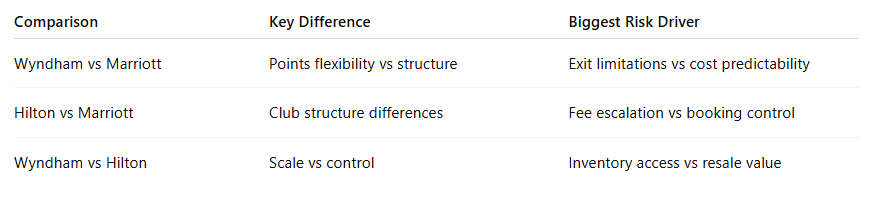
These high-level differences set the foundation — but the details become clearer when you compare operators directly.
Choose Your Comparison Path
Not all comparisons answer the same question. Start with the one that matches your situation:
If you’re deciding between brands:
If you’re evaluating flexibility vs cost:
Prefer to Evaluate a Single Operator?
If you’re focused on understanding how a specific brand is structured — rather than comparing multiple systems — you can review individual operator breakdowns:
- Marriott Vacation Club
- Wyndham Vacation Ownership
- Hilton Grand Vacations
- Bluegreen Vacations
- Diamond Resorts
- Westgate Resorts
Each page analyzes ownership structure, fee mechanics, exit considerations, and structural risk patterns at the operator level.
Not Sure How Your Operator Affects Your Risk?
Different timeshare operators can use different ownership structures, fee models, transfer rules, financing terms, and exit policies. That means two owners may face very different levels of pressure, even when they appear to own similar vacation products.
The Timeshare Risk Score can help you get a clearer read on whether your specific ownership may be relatively straightforward, financially pressured, or more likely to create exit friction.
Takes less than 2 minutes. No documents required.
Before looking at individual comparisons, it’s important to understand a common mistake that leads many owners to the wrong conclusions.
⚠️ What Most Comparison Pages Get Wrong
Most comparisons focus on perks, destinations, or brand reputation.
What actually determines long-term outcomes is contract structure — not vacation experience.
How These Comparisons Are Built
All comparisons on this page apply the Timeshare Structural Risk Framework™, evaluating operators across:
– Ownership structure
– Fee mechanics
– Financing exposure
– Exit pathways
– Secondary market behavior
These comparisons identify structural patterns across operators.
They do not determine individual outcomes.
For a deeper understanding of how structural risk is measured, see the Timeshare Risk Score model.
Structural Variables Evaluated Across Operators
All operator comparisons published here apply the Timeshare Structural Risk Framework™.
Comparative evaluation focuses on five core structural dimensions:
1. Ownership Architecture
Points-based systems, deeded interests, trust structures, and right-to-use models differ in how obligation durability is defined. Perpetual ownership structures often create extended financial horizons that exceed initial purchase expectations.
2. Maintenance Fee Escalation Mechanics
Maintenance fees are typically variable and subject to annual budget approval. Structural exposure depends not only on current fee levels but on escalation authority, reserve sufficiency, and special assessment discretion embedded within governing documents.
3. Financing Exposure Sensitivity
Developer financing often carries elevated interest rates relative to traditional consumer lending products. Loan duration, amortization structure, and cross-default provisions may amplify long-term exposure beyond purchase price.
4. Exit & Transfer Feasibility
Transfer restrictions, administrative discretion, right-of-first-refusal provisions, and internal surrender program eligibility influence liquidity and exit friction.
5. Secondary Market Dynamics
Resale value is influenced by supply-demand balance, transfer fees, enforcement posture, and market timing. Brand strength does not guarantee secondary market liquidity.
Comparisons evaluate systemic tendencies across these dimensions.
What Actually Determines Your Outcome
Operator comparisons show how different systems are designed.
But outcomes are determined at the contract level.
Two owners in the same operator can have completely different experiences based on:
- How their ownership is structured
- Whether financing is involved
- How fees are applied and escalate
- What restrictions exist around transfer or exit
Comparisons provide context.
Your contract determines the outcome.
✅ What to Do Next
Comparisons help you understand how different systems are structured.
But decisions should be based on how your specific contract performs within that structure.
- Identify your ownership type
- Review how fees are applied and escalate
- Understand your transfer and exit constraints
- Evaluate your exposure before taking action
If you’re unsure how these factors apply to your situation, a contract-level evaluation can provide clarity.
👉 Start Your Contract Risk Assessment
Get objective insight based on your actual agreement — not general comparisons.